
Two channels run properly beat five run thin. You just watched a fixed week divide, then divide again. Everything below is that division, priced and put in front of a client.
The arithmetic takes ten seconds. Almost nobody writes it down. Your team finishes a certain number of assets in a normal week. That count is the entire budget for the month, and every channel on the plan is spending out of the same one.
Every channel has a floor. Work below it burns a full week and returns nothing.
So this lesson gives the floor a definition you can compute off your own account, and hands you the one question that gives an unnamed channel a number.
The floor sets itself
Your headcount decides how many finished assets leave the building each week, and no plan changes that figure. Ambition gets no vote in it. Put five channels on a plan with one pod behind them and you have shipped two of the five.
The other three arrive as apologies. Two posts one week, nothing the following week, then a burst of five the day before a review. Nobody planned that shape. It is what a week does when it is asked to cover more ground than it holds.
A channel in that state still draws the full amount from the week. Somebody schedules it, somebody writes the captions, somebody answers the comments underneath it on a Friday afternoon. Tap the panel below and read one of those weeks the way a client reads it.
Switch to the client view and three of the five tracks empty out completely. Same week, same people, same spend on the retainer. Work that never finished is invisible from outside the building, which is why a stretched plan reads to a client as an idle team.
Reading your own floor
A floor is the smallest posting week a channel can run and still return something you would name out loud to a client. Saves. Qualified replies. Profile visits from the roles you sell to.
Underneath that line the posts go out on schedule and nothing at all comes back. The account stays alive, the reporting stays empty month after month, and the channel keeps drawing the same hours it drew before anybody noticed the pattern.
A channel under its floor hands back a full week of work and a screenshot of itself.
Your own number is already sitting in eight weeks of your own history, waiting for somebody to read it off. Lesson four turns those weeks into the figure. Everything after it runs on that figure.
Same hours, two endings
Two teams can spend an identical week and hand a client two very different things at the end of it. Set the weeks beside each other and the split is easy enough to see.
Both columns burn the same week. The client pays the same money for each. The left one carries a named job on every channel it runs. The right one carries five accounts and a paragraph of explanation at the bottom of the report.
A job is the one thing a channel answers for, written in two blanks that both have to be filled.
This channel owns ______, and it does not own ______. Filling the first blank is what everybody does. Filling the second is what stops a calendar absorbing every idea anybody had on a Tuesday.
The blank nobody fills
The first blank usually gets written down somewhere, in a deck or a kickoff document nobody reopens. Somebody says the brand account is for recruitment, or for deflecting support tickets, or for showing work in progress before it ships.
The second blank rarely gets written at all, and it is the one holding the line. A channel with no stated exclusions ends up carrying product news, event photos, hiring posts and whatever the founder sent over on Sunday.
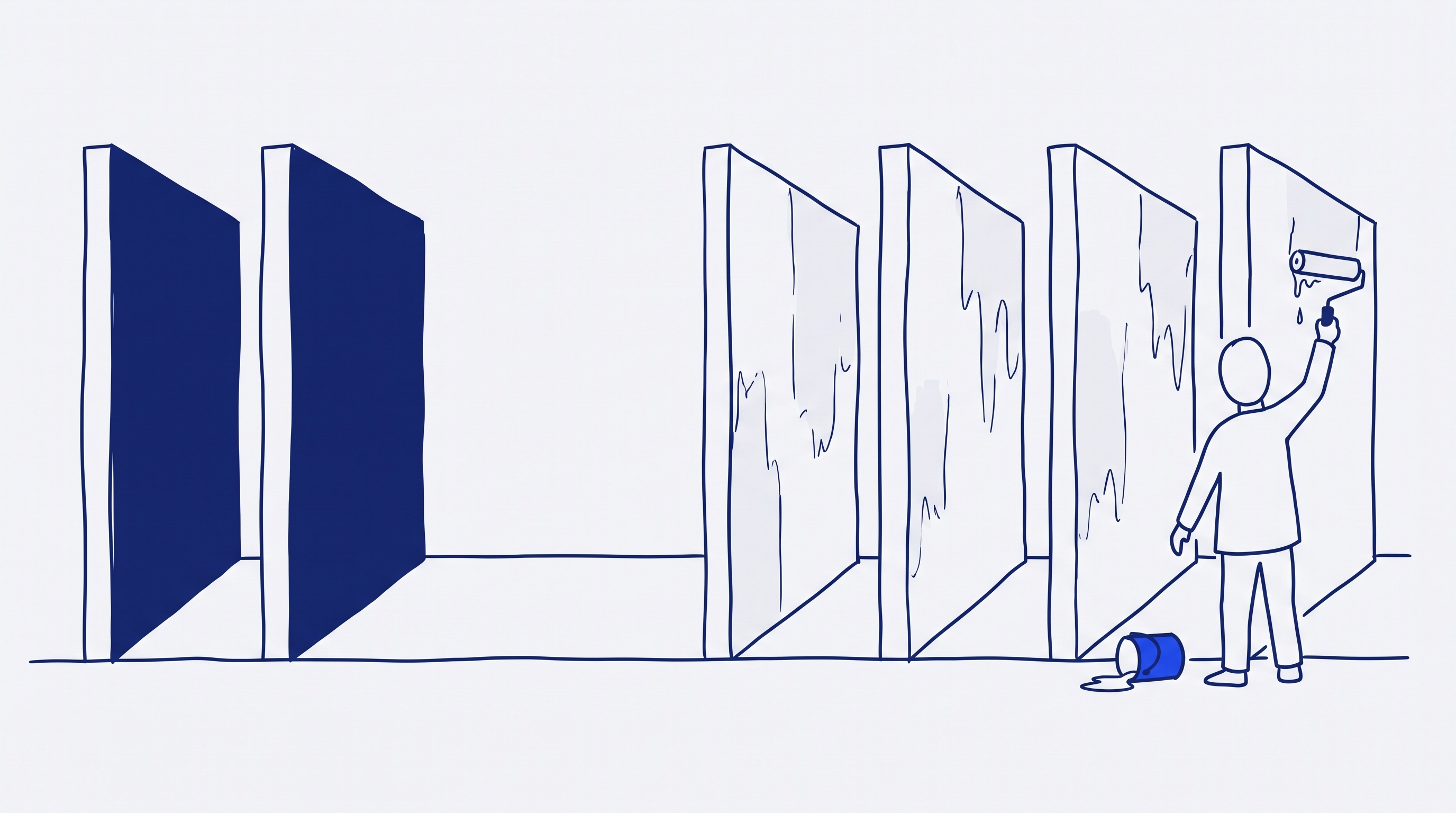
One tin of paint covers two walls properly or five of them badly. Nothing there is about effort. Nobody in that picture worked a shorter week.
What you do now
Three things give an unnamed channel a number, and all three come off screens you already have open.
The count of finished assets your team ships in a normal week, with the holiday weeks left in rather than taken out.
This channel's floor, read off the last eight weeks of its own numbers rather than off a figure somebody quoted at a conference.
The two blanks, both filled in writing: what this channel owns, and what it does not own.
Somewhere on your plan is a channel nobody has ever given a number. The question that gives it one is short: what is the smallest week this can run and still return something? Ask it before the request lands.
Where these numbers come from
Every figure in this lesson is one you produce from your own account rather than one taken from anywhere else. The floor, the finished-week count and the job in two blanks are this course's own framework, written for teams running brand channels against a fixed headcount. Nothing here is a measured result about any tool, any agency or any client. Where a later lesson asks you to say a number out loud, it shows you how to read that number first.